
Rushing headlong into the dark

Despite the upbeat speeches from Wes Streeting and Jim Mackey at this month’s NHS Providers conference, managers and leaders still have few clues about where England’s NHS is heading, writes Geoff Underwood.

As I approached the revolving doors to leave the NHS Providers conference earlier this month, I asked one of the security staff if it was still raining. “It’s Manchester,” he said cheerfully, “it’s always raining.”
It was dark by the time my train pulled out of Manchester Piccadilly. After we’d left the city lights behind we kept on charging forwards but I couldn’t see where we were going. Peering into the gloom it was difficult to see any signs of progress. I settled in as best I could for a long, uncomfortable journey and hoped the train operator would stick to the timetable they’d set out.
The auditorium had been well-lit earlier that day when Wes Streeting and Jim Mackey made their speeches, but I had struggled even more to see where the NHS was going—and felt even less hope that they would stick to the timetables they’d set out.
Regret, but no apology
In the weeks since, I’ve thought a lot about my experience watching those speeches. Sitting in the third row, I felt overwhelmingly angry and I’ve been trying to understand why.
My feelings of anger didn’t come directly from what they said. The speeches were largely upbeat and positive and I generally like that approach from leaders. Debriefing with MiP chief executive Jon Restell afterwards, I recognised there were parts of both speeches I liked. They both acknowledged that people in the NHS, particularly in ICBs and NHS England, have been dealing with “uncomfortable” uncertainty about the reorganisation for too long. I didn’t hear an apology, but I heard regret and some admission of responsibility from Wes Streeting as the minister in charge.
When asked about the impact on NHS staff of more racist rhetoric and behaviour, Jim Mackey was loudly applauded for setting out a very clear anti-racist position and for his unequivocal support for all NHS staff. Wes Streeting got slightly less applause for saying that the BMA was acting like a cartel and threatening the future of the NHS with their approach to negotiations over pay and conditions for resident doctors, but there was some support for his position in the room.
No, it wasn’t what they said that made me angry. My anger came from the huge disconnect between their positive words and the confusing and damaging action they are taking. Here are three examples.
Trust issues
First, they say a key aim of their restructure is to cut bureaucracy. They are certainly planning to cut people—18,000 working people—but they argue that merging NHS England and the Department for Health and Social Care will remove a whole layer of duplication. But as they develop their new operating model they’re adding layers too.
On the day of his speech, Wes announced a new Advanced Foundation Trust Programme, revealing the eight trusts that will be the first to be assessed for this new status next year. Details published by NHS England (see mip.social/AFTs) confirm that existing NHS trusts and foundation trusts will be able to apply to become advanced FTs, which “will also have the opportunity to be designated as eligible to hold an integrated health organisation (IHO) contract to oversee the health budget for a defined local population”.
So, the future operating model of the NHS won’t just have trusts and foundation trusts. We’ll have trusts, foundation trusts, advanced foundation trusts and advanced foundation trusts designated as eligible to hold an IHO contract, which will make them a kind of local commissioner, presumably alongside ICBs as strategic commissioners.
The future operating model looks more complicated and more bureaucratic to me, and more likely to slow the pace of change than to speed it up. In my experience, any “opportunity to apply to be designated” as anything means a whole lot of paperwork, a whole lot of meetings, and a whole lot of time and resources sunk into a bureaucratic process which won’t directly deliver value to the population in itself.
Why add this whole advanced FT layer in at all? If you really want providers with IHO contracts to duplicate the role of ICBs, just cut out the advanced middle man and let existing trusts and FTs apply.
Talking a good game
Second, they say they want to end micromanagement from the centre. But this comes from the same people at the centre who have told every trust and every ICB in the country exactly how much of their budgets, down to the penny, per head-of-population, they’re permitted to spend on management and running costs. This is micromanagement on a national scale. Macro-micromanagement, you might say.
They talk a good game about ending short-termism and ad-hoc demands. But they published the Medium-Term Planning Framework on 24 October, asking for the first draft of three-year plans for activity, performance, workforce and revenue to be handed in by December. Basically about six weeks’ notice to plan the next three years.
Third, Wes Streeting said this in Manchester: “plans don’t deliver change, people do”. He’s absolutely right, but he’s treating the people who deliver change in the NHS appallingly.
He and Jim Mackey have pulled the rug out from underneath every strategic leadership team in the NHS. Think about it—every trust (advanced, foundation or otherwise), every ICB, every part of NHSE and DHSC and pretty much every arm’s length body, including the CSU that I work for, is losing hundreds, if not thousands, of staff or being closed altogether. These are the teams who will actually change the NHS from analogue to digital, from hospital to community and from illness to prevention.
Soul-destroying chaos
Wes made his cheerful speech the day after it was confirmed that NHS England intends to cut 18,000 working people out of the NHS. This includes the teams that have been asked to write the three-year plans by Christmas. But now, as well as getting all that planning done, many will have to make some time in the first fortnight of December to decide whether they want to apply for voluntary redundancy.
That includes me. I work for a Commissioning Support Unit which is scheduled to close by March 2027. We know CSUs will close, but one sentence in the Ten-Year Health Plan was all the detail we were given. My colleagues are working flat-out to find alternative homes for our thousands of people, but as things stand I have no idea at all whether there will be a job for me in the future NHS or what it might be. This month, I will be asked if I’d rather leave than wait to find out.
For all the nice words from Wes about valuing people in the NHS, I can tell you from my own experience and from my conversations with MiP members every day, that morale in the four CSUs, the ICBs, at NHS England and in many trust HQs is at an all-time low. And there is no end in sight to this disappointing, soul-destroying chaos, as the restructures and closures are going to carry on until at least 2027. Like Jim said in October, there’s no rush.
In my mind, I’m still on that train from Manchester, hurtling forwards in the dark to a future I can’t see, while Wes and Jim are still laying out the track ahead and announcing things like new Advanced Train Stations. I just hope enough of us can stay on the train until it stops somewhere the NHS needs us to be. //
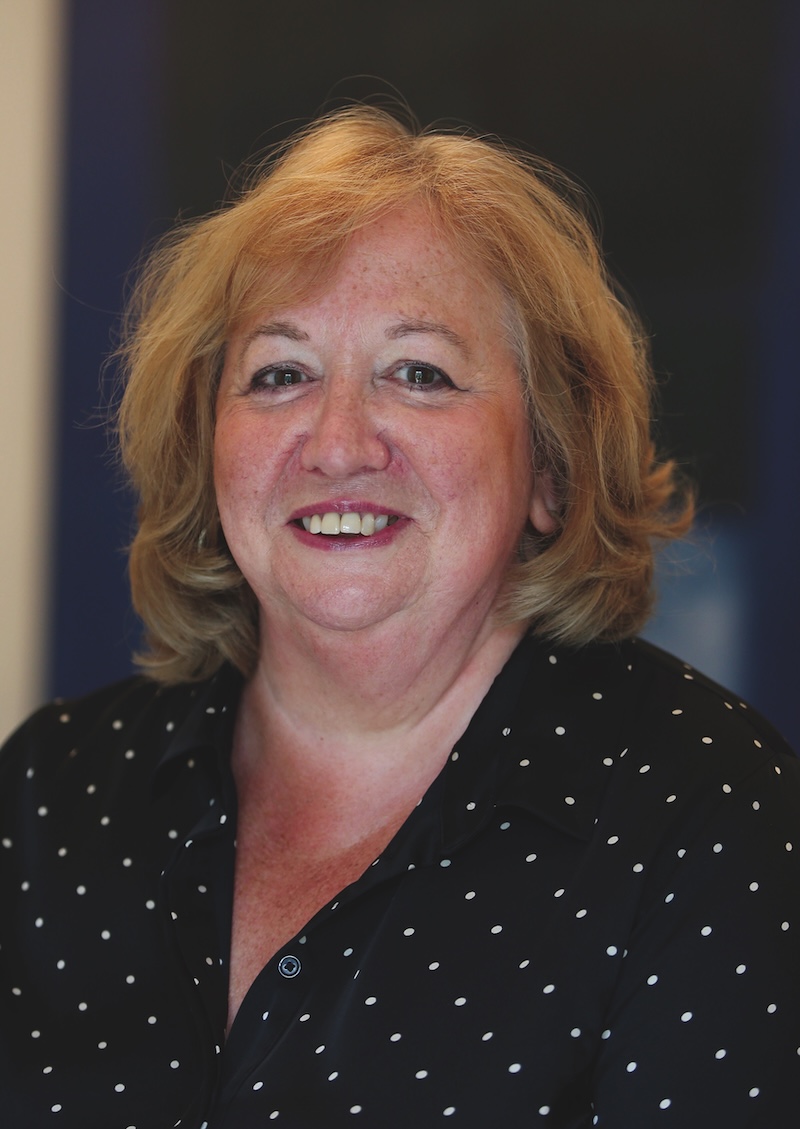
- Geoff Underwood is a programme director at NHS South, Central and West CSU and chair of MiP’s National Committee.
Related Stories
-

Professional regulation: still more questions than answers
After the government unveiled a new barring scheme for board-level executives this summer, plans for regulating NHS managers became a little clearer. But many big questions about how the NHS will regulate, support and develop its future leaders remain unanswered. Rhys McKenzie reports.
-
We’re proud of what MiP has done – managers need it more than ever
As MiP reaches its 20th birthday, general secretary Christina McAnea re-affirms UNISON’s commitment to the unique joint venture that has given NHS management a home and a voice.
-

Forget Musk’s slash and burn—this is what real change looks like
How the NHS can do better without more money is the big question the ten year plan needs to answer. Health economist Andi Orlowski argues for making change with consensus rather than a chainsaw — and explains why ‘allocative efficiency’ is our best bet for real reform.


Latest News
-

FDA General Secretary Election 2026
Please find important information regarding the FDA General Secretary Election 2026 which MiP members may participate in.
-

Government proposal for sub-inflation pay rise “not good enough”, says MiP
Pay rises for most NHS staff should be restricted to an “affordable” 2.5% next year to deliver improvements to NHS services and avoid “difficult” trade-offs, the UK government has said.
-

Unions refuse to back “grossly unfair” voluntary exit scheme for ICB and NHS England staff
NHS trade unions, including MiP, have refused to endorse NHS England’s national voluntary redundancy (VR) scheme, describing some aspects of the scheme as “grossly unfair” and warning of “potentially serious” tax implications.


