
“I’m only here to make sure we’re making a difference. If we don’t improve people’s health, I’ll resign.”
Former council chief Robin Porter has endured a baptism of fire since joining the NHS last year. Now set to chair Central East, England’s largest ICB outside London, he talks to Craig Ryan about missions, mergers and making a difference.

“My career’s been schooled on taking personal accountability,” says Robin Porter, former council chief executive and incoming chair of the new Central East Integrated Care Board (ICB), which opens for business this April. “If we aren’t delivering health improvements, I will resign, because I’m only here to ensure that we’re making a difference.”
Porter says his “making a difference” is his motivation; it’s a phrase he repeats many times during our conversation. A humanities graduate, he served six years as an army officer before drifting into project management in the private sector—lucrative but “not socially and morally rewarding,” he recalls. “I wanted to make a difference to a place.”
That place turned out to be Luton. He joined the town’s unitary council on an 18-month contract and stayed for 18 years—including spells running the council-owned Luton Airport and managing school building projects—on his way to becoming chief executive in 2019.
“I absolutely, utterly loved Luton. It’s a fantastic place, huge opportunities, huge energy, but with very clear challenges,” he says. “It’s big enough to make a difference but small enough to get your arms around.”
Misson: impossible?
Those challenges include some of the most deprived areas in England. Porter recalls once “naively” asking a schoolgirl if she was looking forward to the summer holidays only for her to break down in tears. “For her, the holidays were about being hungry,” he says. “During school term she got two good meals a day… and she was now facing a couple of months of food uncertainty. That really crystallised for me why I wanted to become chief exec and what I wanted to do.”
That encounter led to his interview pitch for a “system” strategy—pointedly not a “council” one, he says—to eradicate poverty in Luton by 2040. It’s bold, it’s specific, it looks impossible. But that’s the point.
“The only way that was going to happen was to get the public sector working on a single mission, [getting] our voluntary, community and faith sectors and our population behind the strategy and—super importantly—getting the private sector involved,” he explains. “Getting big organisations to align their social responsibility programmes around this mission has “given it massive impetus”.
Adopted with cross-party support six years ago, Luton 2040 has already yielded tangible results: child poverty in Luton has fallen from 46% to 39%—impressive against a backdrop of rising figures nationally. “We’ve taken 5,000 people out of destitution,” Porter adds proudly.
He “absolutely” sees a similar mission for Central East in driving down the “huge” health inequalities between “massively affluent areas”, like Harpenden and St Albans, and the “deep pockets of deprivation” found in Luton, Bedford and even parts of Cambridge. “I don’t think it’s right morally that we should be accepting those [inequalities],” he says.
Better off is healthier
Formed by bringing together Porter’s Bedford, Luton and Milton Keynes ICB (BLMK) with the neighbouring counties of Cambridgeshire and Hertfordshire, Central East is a huge patch, but comes with “huge opportunities”, he says, including several “world-class” hospitals and Europe’s biggest biotech campus in Cambridge.
Bringing home some of the £1 billion spent out of area will also benefit Central East residents by moving care closer to home and generating extra income for local trusts. “The socio-economic benefit of bringing that spend back into area is massive,” he explains.
By targeting that cash and the “uptick” in funding he expects from the area’s rapidly growing population where it’s most needed, Porter believes the ICB can reduce inequality without swiping resources away from more affluent areas.
As an example, he points to “really poor” early cancer diagnosis rates in Luton. “There’s a direct link between improving cancer services and health outcomes. But when you look at what we provide in Luton, there’s no community diagnostic centre there,” he explains.
“Being better off is absolutely healthier”, he says, so tackling health inequality, like Luton 2040, demands a whole-system solution. An NHS strategy alone “is going to fail”, he warns. “The Ten Year Plan is absolutely dependent… on system working with local authorities, the voluntary community sector and residents.”
That means focusing on “what happens in streets and neighbourhoods and places”, he says. Working with Central East’s incoming chief executive, Jan Thomas, Porter has developed a devolved structure based on the three county areas, with neighbourhood delivery committees doing the groundwork on joining up services.
As an example of a “real integrated team”, Porter points to an urgent care hub he recently visited in Luton. Here, ambulance managers working alongside A&E consultants, social care services, community workers and hospice staff have reduced conveyances to hospital emergency departments by 4.5% at a time when conveyances have been rising nationally.
‘Almost serendipity’
Porter left Luton Council in April 2025 to spend more time with his wife Laura, who was unwell and sadly died a few months later, and his young son, Jack. “It’s just not possible for me to be a single parent and do an exec role with the type of energy and gusto that exec roles need,” he explains. So it was “almost serendipity”, he says, that the BLMK chair job fell vacant at just the right time.
Having represented the council on the ICB’s board, he “knew the massive impact the NHS has on [people’s] ability to lead happy, sustainable, rewarding lives. The NHS is so incredibly central to what makes us a nation,” he says.
He sometimes misses the operational control he had at Luton. “The hardest thing to let go of is the decision making, because it’s not my role to make decisions,” he says. Instead, his job is “ensuring we’ve got the strongest possible exec team, the strongest possible inclusive board” and “providing positive, appropriate challenge and support to the execs”.
But above all, he says, the chair and the other non-execs are “there to act on behalf of our 3.5 million residents”. He has insisted that all six non-execs—two for each county—have a “place focus” and live in their areas. “I want people around the board table who understand the needs of their places, who understand the differences between Bletchley and Hemel Hempstead,” he explains.
With its wholly bureaucratic chain of command going all the way up to ministers, it’s a pragmatic, if imperfect, fix for the lack of local accountability in the NHS. Formally, Porter reports to NHS England regional director Clare Panniker. “We have a great relationship, she’s a hugely talented individual,” he says, but ultimately he sees himself as “accountable to 3.5 million residents for making a difference to their lives”.

Public service has got to evolve
Porter’s first nine months in the NHS have seen a firestorm of change. ICBs are being merged at a blistering pace, and are losing half their staff while implementing sweeping but still poorly-defined changes to their powers and responsibilities—a triple upheaval that’s probably unprecedented in British public services.
We’ve got used to NHS leaders robotically intoning that all this is going to be “very challenging”, but with Porter you sense that he understands just how hard it’s going to be. And also that he’s done a lot of thinking about how—through devolution, integration and a mission approach—it might just be made to work.
“We’ve had to reinvent ourselves and do it at speed,” he says, rejecting my suggestion that the reforms are chaotic: “The public service, for me, has got to move at speed. It’s got to evolve.”
The NHS has seen “huge demand increases,” he says, “but it’s also had a lot of extra money”. He believes he can bring the skills honed in local government during the dramatic funding cuts of the austerity years “to help the exec team and colleagues across the organisation cope with the brave new world.”
Prevention will be a “huge” part of coping, he says. BLMK has had a ‘prevention by default’ strategy for primary care since early 2024, but Porter accepts that previous attempts to reduce demand by boosting public health and preventative services have been quickly derailed by other, shorter-term priorities. Pressure to cut waiting lists, reduce A&E delays and improve ambulance response times won’t be going away.
“Yes, it’s going to take huge levels of discipline,” he says, but “not focusing on prevention is a bit like cutting your arm off.” The ICB must work “collaboratively” to make sure all partners—including trusts—“buy into the absolute need to keep focusing on prevention”. Otherwise, he warns, “the issues are going to get worse and worse.”
But will slimmed-down ICBs have enough clout to enforce that kind of discipline? ICBs may have stopped performance managing trusts but will still have leverage, Porter suggests, through commissioning, managing and monitoring contracts, while “working in concert” with the regional teams managing trusts’ “overall performance”.
A new mission
The mysterious ‘strategic’ commissioning that is now ICBs’ main job just means better—and better-informed—commissioning, he suggests. “We’re going to be absolutely data-focused, focused on keeping people out of the healthcare system.” ICBs will need to “radically change” their approach, he says, “so that we’re not buying tomorrow what we’re buying today—because our populations need a different focus.”
But as trusts begin to encroach on ICB territory by turning themselves into ‘integrated healthcare organisations’ (IHOs)—with contracts to manage and commission all health and care services in their patch—some ICB managers fear they are being set up to fail. But Porter insists he wouldn’t have taken the job if he thought ICBs were just being managed out of the system.
“We’re going from micromanaging hospitals to delivering the Ten Year Plan”, an “absolutely central and important role,” he says. The government’s policy is “still evolving and we’ll deal with it as it becomes clearer”. But he suggests IHOs may emerge as a sort of local subcontractor for ICBs, covering a much smaller area like Luton or Bedford.
“We are going to crack on with a clear approach that we’re going to be around for the medium to long term, and I’m not going to worry about stuff we can’t control,” Porter adds.
What does keep him awake at night is the pace and scale of the merger and its impact on “the dedicated, wonderful colleagues who are going to lose their jobs”, he says. “It’s very challenging organisationally but also at a human level.”
He insists his merger is not a takeover by any one ICB or a process of cherry-picking the best from each and bolting them together. “In our heads, it’s not a merger,” he says. “We’re forming a new organisation from the three previous ones. Being super clear with the team that this is a new organisation with a new mission, a new energy, has been really important.”
What would success would look like for Central East if we are sitting down again in a few years’ time? “Success looks like tangible outcomes,” Porter replies, in particular, “measurable” improvements in the board’s five priorities: early cancer diagnosis, musculoskeletal self-care and support, cardiology, co-ordinating care for advanced illnesses and acute mental health. “Across each of those five, we will see tangible improvements for our 3.5 million residents.” It’s not a question of hoping, he insists. “That’s what will happen. I’m confident about that.” //
Related Stories
-
Daniel Elkeles: “There’s a lot of green shoots here—the NHS is in a much better place”
As NHS Providers annual conference gets underway in Manchester, we speak to chief executive Daniel Elkeles about next year’s merger with the NHS Confederation and the future for NHS trusts in England. He tells Alison Moore that providers are “well placed” to deliver the Ten-Year Plan—but warns an unhappy workforce and a lack of investment could throw big spanners in the works.
-
Angela Hillery: “Nobody can do this on their own”
Angela Hillery, chief executive of community trusts in Northamptonshire and Leicestershire, is one of England most influential NHS leaders and a pioneer of collaborative working. She talks to Craig Ryan about why integrating services offers the best chance of overcoming a hostile environment and turning the NHS around.
-
We’ve given NHS management a home – we care for it and campaign for it
MiP is 20 years old this summer and its chief executive, Jon Restell, has been there since the beginning. He reflects on the union’s past, present and future in conversation with Healthcare Manager editor Craig Ryan.


Latest News
-
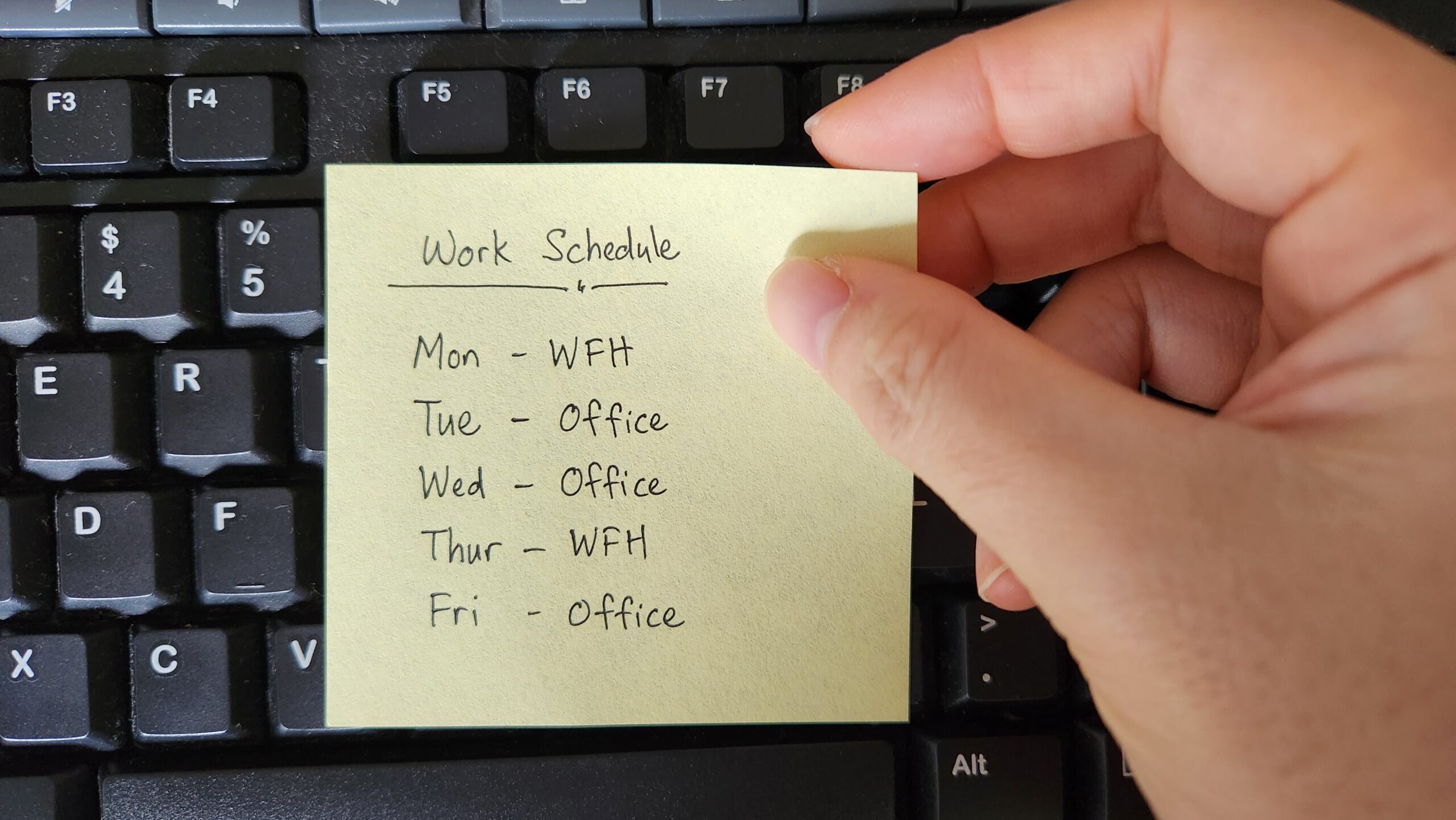
Back to office order reversed after unions and staff protest
NHS England has “paused” its demand for staff to work in the office for at least 60% of their working time following opposition from staff and trade unions.
-
Government must “come clean” about NHS shake-up, says MiP
A year after it ordered tens of thousands of job cuts in the NHS in England, MiP is urging the government to “come clean” about how the NHS will be run after the changes.
-

Government proposal for sub-inflation pay rise “not good enough”, says MiP
Pay rises for most NHS staff should be restricted to an “affordable” 2.5% next year to deliver improvements to NHS services and avoid “difficult” trade-offs, the UK government has said.


