
“We waste so much money trying to implement something that doesn’t work.”

Rebecca Howard, ShinyMind
“Where innovation sometimes goes wrong is that it isn’t co-designed,” explains Rebecca Howard, psychologist and founder of Shiny Mind, a digital mental health and wellbeing programme developed with the NHS. “I think we cut out co-design because it’s expensive, but we waste so much money trying to implement something that doesn’t work.
“Co-design with patients and clinicians is laborious, time-consuming, and you’ve got to absolutely be open to the fact that what you think is right could be complete rubbish,” she adds.
Originally developed to support NHS staff, Shiny Mind is now being prescribed for patients with anxiety and depression by GPs in Bedford, Luton and Milton Keynes. “They had a group of passionate clinicians who had used Shiny Mind for their own mental health and could see it would support their patients,” explains Howard.
Billed as “a hug in an app”, Shiny Mind offers range of wellbeing tools and masterclasses as an alternative to conventional treatments like in-person therapy and medication. There are separate editions for patients and NHS staff, and a new version for nursing and midwifery students has just been launched.
After retraining as a psychotherapist, former marketing executive Howard became interested in how therapy could be used in “a preventative, proactive way” rather than waiting until “people are falling down”. With initial funding from an angel investor network, the first version of Shiny Mind was co-created with staff at the NHS Walton Centre in Liverpool over the course of a year.
Although one-to-one therapy is still important — Howard still practices herself — “patients are more receptive to digital than we think they are. People increasingly want to access care in their own time and space,” she says.
Related Stories
-
Trust.ai? Managing new tech responsibly
Managing AI responsibly will be one of the biggest challenges facing NHS managers in the coming decade. Governments are keen to ride the latest technological wave, but trust in AI varies wildly and big questions about governance and regulation remain unanswered, writes Craig Ryan.
-

NHS job cuts a risk to cybersecurity as threat of AI-powered attacks rises “dramatically”
The threat of potentially catastrophic cyber attacks on the NHS has increased “really dramatically” in recent weeks and is still “accelerating”, NHS England chief Sir Jim Mackey has said. His warning came just weeks after NHSE’s board was warned by its own digital experts that NHS job cuts posed an “unmitigated” risk to cybersecurity.
-

Plug us back in: why AI transformation is a people business
In the first part of our new series on AI in the NHS, we explore the gap between the government’s claim that the NHS being “the best-placed system in the world” to take advantage of AI, and the reality of digital job cuts and disengaged staff. If the NHS is serious about AI, it needs to invest in people as well as kit, writes Craig Ryan.


Latest News
-

NHS publishes new Staff Standards and Leadership and Management Framework
NHS publishes new Staff Standards and a framework for managers which aims to improve staff experience and working conditions.
-
NHS reforms at risk as management capacity is cut, MPs told
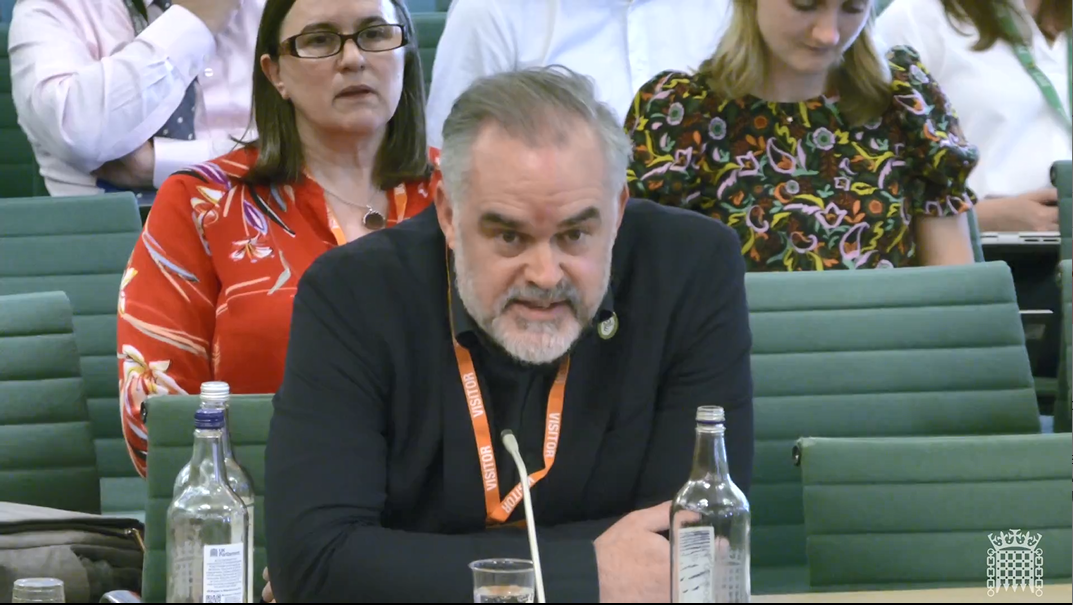
MiP Chief Executive Jon Restell warns MPs that NHS reforms are at risk if the management capacity needed to make them happen is cut.
-
MiP responds to Health Secretary James Murray speech at NHS ConfedExpo
MiP says Health Secretary James Murray was right to recognise the innovation and creativity in the NHS, but the very people who drive it are the ones who are losing their jobs.


