
“I’ve never seen people work as hard as they do in the health service”
Karin Jackson, an NHS senior executive manager and engineer, is already making a big impact as MiP’s new National Committee rep for Northern Ireland. She talks to Craig Ryan.

“We may be small, but if you’ve got a $20 billion Ferrari and can’t put fuel into it, you’re not going anywhere,” says Karin Jackson, chief executive of the Northern Ireland Blood Transfusion Service (NIBTS). “If we don’t deliver then the whole system stops.”
It’s Karin’s job to make sure that doesn’t happen. The service put out an urgent appeal this summer when a critical shortage of O-negative blood threatened to bring the NHS to a standstill. “The public responded and now our stocks are really healthy,” she says. But that can change in a matter of days. Only 3% of eligible people give blood, she explains, and the big challenge is encouraging younger people to donate. England “has really struggled with this too, she says. “It’s a global phenomenon.”
But her biggest headache remains the “massive hole” in Northern Ireland’s healthcare budget. “There’s so much demand—we’re meeting it in blood tranfusion, but we’re creaking at the seams,” she explains. Small organisations like NIBTS can be “agile” but also “very fragile”, she says. “If someone falls over, for any reason, delivering the service becomes very difficult.”
An engineer first
Before joining the NHS, Karin was an engineer at Ford plants in South Wales and Belfast. She says engineering gave her an understanding of “systems, process and flow”, and evidence-based practice, that transferred well to healthcare. “Medics and engineers have either tension or affinity depending on which university you went to,” she explains, “but I think it helped having… a fresh set of ideas and thoughts.”
When Karin told her usually mild-mannered father she was considering studying accountancy instead of engineering, “because I’m a girl”, he became “quite annoyed”, she recalls. “I never want to hear you say that ever again. That’s not a reason not to do it,” he said. A female engineer was still seen as unusual at Ford in the early ’90s, she says. “I used to say, ‘I’m an engineer first and just happen to be female. For me, this is normal. It’s the men who are used to dealing with other men who find my presence unusual.’”
Karin joined the Royal Hospitals in Belfast in 2002, working in research governance and medical education, then operational management. “Coming from the private sector, the perception was that you didn’t really know how this place works,” she recalls. But operational management is “all about guiding and encouraging people, making life a bit easier for them… whether that’s in manufacturing or healthcare,” she says.
Very fast moving
Twenty-three years in the NHS have shown her that “it’s very fast moving—there’s a huge amount of innovation that people aren’t aware of,” she says. “And in the private sector, I never saw people working as hard as they do in the health service.”
Karin is no exception to that. Alongside her management career, she has already accumulated three masters’ degrees in different fields. She ascribes her passion for lifelong learning to either “a deep psychological flaw—constantly wanting to catch up” or “a genetic predisposition” inherited from her father. “Every time I finish one, I say, ‘never again’,” she says. Inevitably, she’s now embarked on a four-year doctorate in business administration at the University of Liverpool, with plans to research why people resist organisational change.
This isn’t an abstract question for Karin; as director of the Pathology Blueprint Programme, she’s working to bring all Northern Ireland’s pathology services—including NIBTS—into a single organisation. What leads people to resist change is complicated: “resistance isn’t consistent, even within individuals”, she explains. People often “flip over” between enthusiasm and opposition, “and that’s what I want to explore”.
Patience running out
Karin is already having a big impact as MiP’s new National Committee rep for Northern Ireland. Earlier this year, she was instrumental in breaking the long-running impasse that has left NHS senior executives in Northern Ireland earning significantly less than counterparts in the rest of the UK.
Karin worked with other unions, ministers and fellow NHS leaders to broker a “politically palatable” agreement, which saw many senior executives get substantial pay rises this year, narrowing the gap with England, Wales and Scotland. “Patience was running out. We’d been told for 20 years that this was going to be sorted out,” she says. Members were in the “uncomfortable position” of contemplating industrial action, but as a cohort of 74 staff in a 40,000-strong workforce,“you don’t have much leverage,” she explains.
The successful negotiation has raised MiP’s profile in Northern Ireland, leading to an influx of new members. As a union member since her early days at Ford, Karin says the deal proves that “the collective voice is far stronger than the individual… It demonstrated what you can do with visible trade union support and engagement.” The successful negotiation has raised MiP’s profile in Northern Ireland, leading to an influx of new members. As a union member since her early days at Ford, Karin says the deal proves that “the collective voice is far stronger than the individual… It demonstrated what you can do with visible trade union support and engagement.” //
- If you’re interested in becoming an MiP rep, contact MiP’s national organiser Rebecca Hall.
Related Stories
-

Tipster: Working in the grey—how to manage uncertainty
Leadership coach and former senior detective Andy Cribbin gives his tips for managers on making effective decisions with limited information, whilst navigating the uncertainties of rapid change.
-

Tipster: How to manage new tech with a spring in your step
Digital and business change veteran Sue Carter offers her tips on how to seize the opportunities offered by new technology for the benefit of your colleagues and patients.
-

Tipster: How to manage in a crisis
Leadership coach and former senior detective Andy Cribbin offers his tips for managers on how to prepare for a crisis, manage calmly and deliver results that people will remember.


Latest News
-
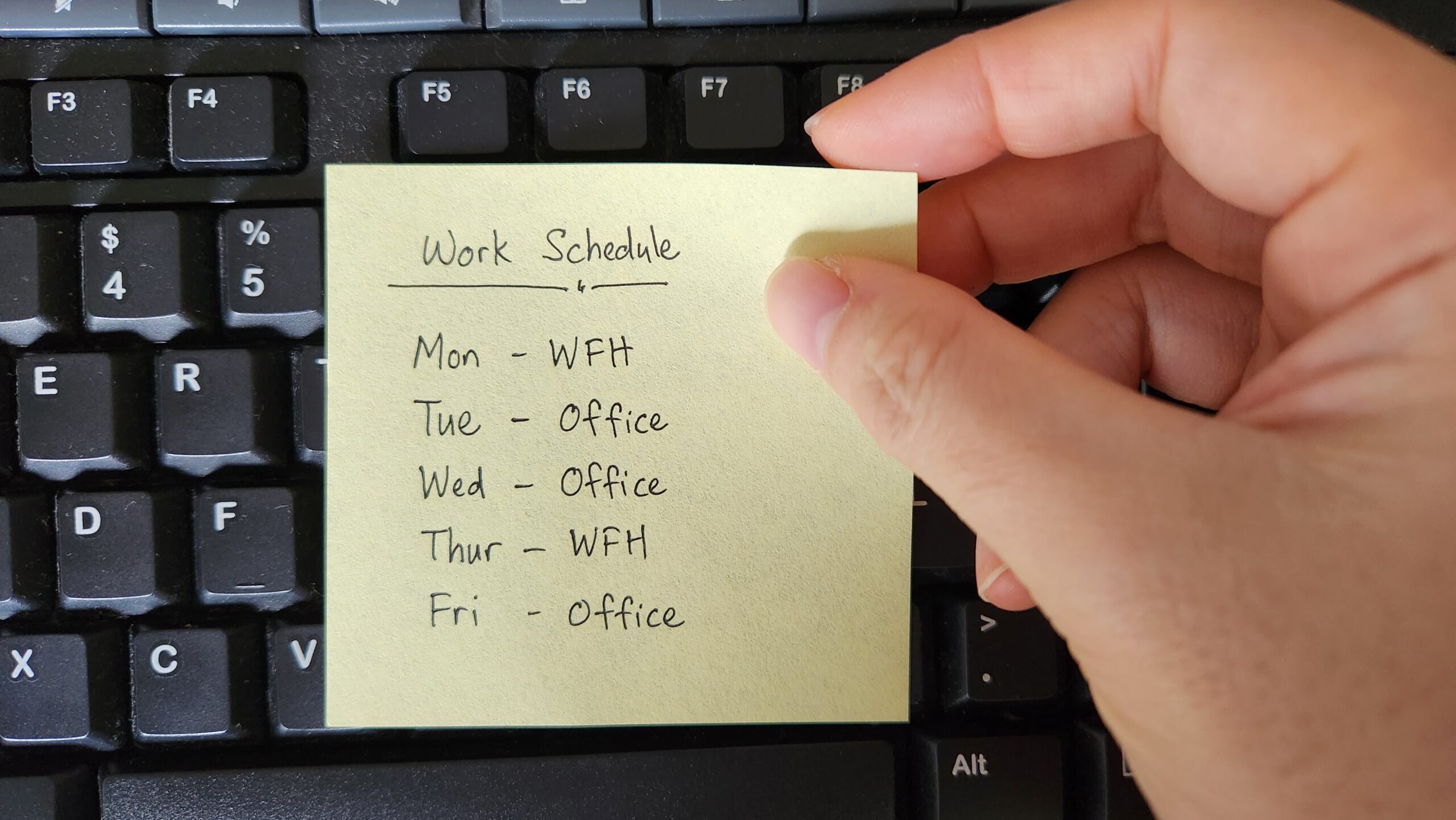
Back to office order reversed after unions and staff protest
NHS England has “paused” its demand for staff to work in the office for at least 60% of their working time following opposition from staff and trade unions.
-

Government proposal for sub-inflation pay rise “not good enough”, says MiP
Pay rises for most NHS staff should be restricted to an “affordable” 2.5% next year to deliver improvements to NHS services and avoid “difficult” trade-offs, the UK government has said.
-

Unions refuse to back “grossly unfair” voluntary exit scheme for ICB and NHS England staff
NHS trade unions, including MiP, have refused to endorse NHS England’s national voluntary redundancy (VR) scheme, describing some aspects of the scheme as “grossly unfair” and warning of “potentially serious” tax implications.


