
Working in the grey: how to manage uncertainty
Leadership coach and former senior detective Andy Cribbin gives his tips for managers on making effective decisions with limited information, whilst navigating the uncertainties of rapid change.

Right now, NHS leaders are being asked to make long-term decisions when even the immediate working landscape is uncertain. To make informed choices and defensible decisions in this situation, leaders need to capture all the available data, identify gaps and work through the possible scenarios.
1. Stick to your values
Stay aligned with your core principles and those of your organisation. Your values should be at the heart of your decision making; using them as guiding beliefs will help you make better choices. When you get it wrong—as we all do sometimes—if your rationale shows that you were acting with honesty (no hidden agenda), integrity (no personal gain) and transparency (clear documented reasoning), it will be easier to defend your decision under scrutiny.
2. Focus on your goal
What’s the objective? What’s your end game? Keep your focus on what you want to achieve. There will always be compromises and changes to your plans, but these should not be to the detriment of the required outcome. Defining what success looks like will help you to filter out any distractions.
3. Assess what you know
How reliable is the information you’re working with? Is it from a trustworthy source? If it’s anonymous or untested, be clear about that and give it less weight than something that you know is true without reservation. Document what is fact, any constraints and your working assumptions.
4. Hypothesise
Using hypotheses allows you to make educated guesses to guide your decision-making. They serve as initial explanations based on your existing knowledge, helping you to predict outcomes and test assumptions. By narrowing possibilities and focusing your attention, hypotheses can reduce uncertainty, enabling quicker, more strategic choices. Well-formed hypotheses provide direction and can be refined or discarded as new data becomes available.
5. Find your experts
If you’re unfamiliar with the area, which experts can help? They can’t and won’t make decisions for you, but they’ll give you a strong foundation to work from, providing new possibilities or ruling out some of your initial hypotheses. Seeking a range of views and opinions will help you to see things from different perspectives.
6. Assess the urgency
Is the risk and threat posed by the problem so great that you need to make a decision now? If not, when do you need to make it? How much time have you got to think it through and gather more information? Some of my best decisions were made the following day; it’s amazing how your mind works, even when sleeping, so that something that seemed complex can suddenly seem straightforward 24 hours later. But equally, a timely decision can be better than a seemingly perfect one taken too late.
7. Keep doing the basics
With challenging decisions, it can be tempting look for a different approach to your normal one. This may be necessary sometimes, but sticking to your tried and tested methods can help bring clarity and confidence to your decisions.
8. Own your decisions
A wrong decision can be justified based on the information known at the time and the reasonableness of your decision. Own it, don’t try to pass the blame or make excuses. When you become aware of new information, review your original decision and don’t be afraid to change it if necessary. Learn from results and adapt.
9. Evaluate risk
Consider worst-case and best-case scenarios. Ask yourself: “what’s the cost of being wrong?” If the consequences are serious, test small and use the results to verify your choice or amend where appropriate. Is not responding a worse outcome than taking action?
10. Trust your experience
The more limited the information, the more challenging the decision, particularly when the outcome is important. There is always a risk of procrastination and imposter syndrome creeping in. Remember you’re in the job on merit and because of your past successes—be confident in your ability. If it’s ‘gut instinct’, write down what’s forming your view; this will help you to rationalise your thought process and support your choices. //
- Andy Cribbin retired in 2021 as a detective superintendent after 30 years with Lancashire Police. He now provides leadership training and coaching for private and public sector organisations.
Related Stories
-

Tipster: How to manage new tech with a spring in your step
Digital and business change veteran Sue Carter offers her tips on how to seize the opportunities offered by new technology for the benefit of your colleagues and patients.
-

Tipster: How to manage in a crisis
Leadership coach and former senior detective Andy Cribbin offers his tips for managers on how to prepare for a crisis, manage calmly and deliver results that people will remember.
-

Tipster: Building resilience for you and your team
Resilience helps us to cope with stress and challenges, and promotes engagement and satisfaction at work. But without it, work pressures can damage our emotional and physical wellbeing. Jane Galloway offers her tips on building your own resilience — and that of your team.


Latest News
-
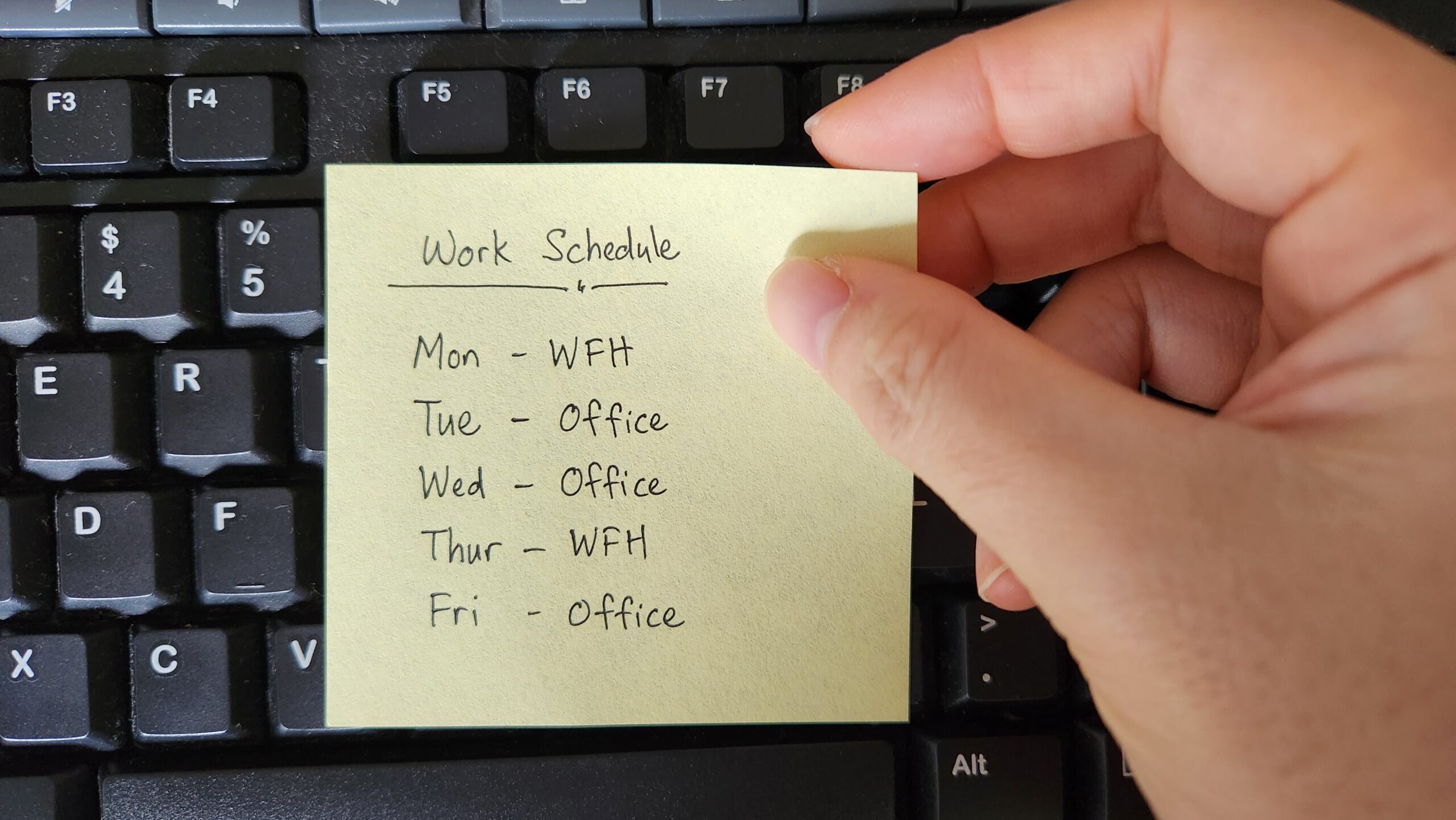
Back to office order reversed after unions and staff protest
NHS England has “paused” its demand for staff to work in the office for at least 60% of their working time following opposition from staff and trade unions.
-

Government proposal for sub-inflation pay rise “not good enough”, says MiP
Pay rises for most NHS staff should be restricted to an “affordable” 2.5% next year to deliver improvements to NHS services and avoid “difficult” trade-offs, the UK government has said.
-

Unions refuse to back “grossly unfair” voluntary exit scheme for ICB and NHS England staff
NHS trade unions, including MiP, have refused to endorse NHS England’s national voluntary redundancy (VR) scheme, describing some aspects of the scheme as “grossly unfair” and warning of “potentially serious” tax implications.


