
NHS job cuts: you’ll never walk alone
As the NHS redundancies in England loom, Rhys McKenzie explains how MiP will back you, and how members supporting each other and acting collectively is the best way to navigate this difficult process.

As we explored in a previous story, change in the NHS is inevitable. Since then, the Department of Health and Social Care and the Treasury have signed off on the national model voluntary redundancy scheme and given the NHS in England the green light to start cutting thousands of jobs. In many areas, the process will have already begun.
Last time, we focused on the mechanics of job cuts—the options employers can use and your rights as working people. Staff and union resistance to unfavourable Mutually Agreed Resignation Schemes has limited their use, but employers have now started to roll out voluntary redundancy schemes and, depending on take up, may move on to compulsory redundancies.
You can refer back to Corrado Valle’s previous article to remind yourself of the differences between these ways of cutting jobs. The MiP website also carries the latest guidance and news on the job cuts nationally.
This article will not focus on any particular voluntary scheme. Instead, we’ll outline how your union supports you collectively during restructures, why that collective approach matters, and how you can support yourself and fellow members too.
Collective action
Collective bargaining is the very essence of trade unionism. By standing together, staff can secure better outcomes than any single person ever could. It’s what gives trade unions influence and power. It’s the only reason employers are willing to negotiate on terms and conditions, and it is the most effective method of protecting staff during change processes.
These days, it can be forgotten that the members of a union are the union. A trade union is only as strong as its collective membership. Collective representation starts with members—even if they’re not workplace reps.
You and your colleagues shouldn’t have to face change alone. Offering support to your peers—checking in, sharing information and highlighting concerns—will go a long way in easing anxieties around the process.
When you or colleagues have concerns, it’s important to feed these to MiP workplace reps and national officers, who can use partnership structures to raise them with the employer. You can do this by speaking to your local rep, at a member meeting or drop-in session online, or by contacting MiP Member Advice directly.
It’s also important to engage with employer-led consultation processes early and encourage your fellow members to do the same. This helps ensure that any subsequent communications from the employer are thorough and accurately reflect what staff think and feel.
Make sure you attend all staff briefings during the change process and gather as much information as you can. When you’re invited to one-to-one meetings with your line manager, it’s important to go along and outline any individual issues, such as flexible working arrangements and caring responsibilities. These meetings, early on in the process, are not adversarial, so having a union representative with you is not normally necessary.
MiP reps and national officers
MiP reps in your workplace and national officers (MiP staff) will support members collectively as much as possible during an organisational change process. They will use existing partnership arrangements to meet regularly with the organisation’s leadership and HR department throughout the process. During these meetings, your representatives will raise concerns on your behalf, request changes, and hold your employer to account on their legal obligations.
When consultations open, your representatives will ensure members have a channel to give feedback—either though member meetings, surveys or written feedback.
MiP’s representatives will engage with the employer to ensure your concerns are taken into account and work with them to solve problems and reach agreements. Employers have a legal obligation to meaningfully consult with you and your representatives.
Your representatives will respond collectively to a consultation on your behalf, requesting clarification, changes to terms and improvements to the final documentation. Employers will formally respond to the concerns raised and outline any revisions in the final scheme.
The response to the consultation will be shared with members at a each employer. By law, your employer does not have to agree with every objection or suggestion, but they must genuinely consider them and have good reasons for rejecting them.
MiP will also provide you with our overall position on your specific redundancy scheme. Not all schemes are created equal—terms and conditions can vary greatly, including differences on payments, clawback terms and selection criteria. If we believe a scheme has specific drawbacks, or indeed incentives, we’ll make sure you know about them.
If the scheme is voluntary, you are under no obligation to put yourself forward. If you do, you will still have the full support of your union, regardless of our position on the scheme.
Following the consultation period, MiP will continue to keep you informed as much as possible as the redundancy scheme progresses. We will continue to engage with the employer locally and seek to exert influence at a national level if changes are being driven by the government and NHS England.
Individual support
With voluntary schemes, bespoke individual assistance for every application is not possible because you’re under no obligation to apply or to accept an offer. It’s a voluntary process, so there’s not much more unions can do after the consultation period has ended. If the employer has fulfilled its legal obligations, then the terms of the scheme are unlikely to change.
MiP will generally provide you with individual support at the settlement stage if you have been approved, or at the appeal stage if you have been rejected. MiP members are entitled to free legal advice on settlement agreements from MiP’s legal partners, Thompsons Solicitors. Seeking legal advice on settlement agreements is a prerequisite before they can be accepted and become binding.
If you are rejected and would like to appeal that decision, your local reps or the national officers for your area will look into your case and offer support as necessary. If you have been treated unfairly, MiP will support your appeal.
It’s important to take financial advice before accepting any settlement. All members are entitled to initial financial advice through MiP’s financial partner, Quilter.
If you think your employer is not fulfilling their legal obligations in any redundancy process, it’s important to let your local reps know as soon as possible. While employers can legally cut jobs, anything that does not seem right should be reported and MiP will seek clarity and a legal opinion if necessary.
Similarly, if you believe you are being treated unfairly during a voluntary redundancy process—for example by being discriminated against due to a protected characteristic, your working hours or because you have been on leave, you should let MiP know as soon as possible and the union can give you further support.
Managers often sit at the most pressured point in any organisational change process. They are expected to support teams while managing their own uncertainty. This puts managers in extremely difficult positions. They are often seen as the implementers of change—not as staff who are also going through it.
Change rarely arrives with certainty. That’s why supporting each other collectively—through peer support, engaging with consultations and enabling your representatives to speak on your behalf by giving them feedback, gives us the best chance of successfully navigating what’s ahead.
Managers deserve support every bit as much as the teams they lead. No one should have to face change alone—and if we stand together collectively, no one has to. //
- Rhys McKenzie is MiP’s communications officer. This article is not intended as employment advice and individual schemes may differ. For advice and support during organisational change, keep up-to-date with the latest communications from MiP and your workplace reps.
Related Stories
-

Let me shine: a manager’s guide to supporting autistic colleagues
Autistic staff make a huge contribution to the NHS but can find workplace life hard to navigate and still face significant barriers to promotion and career development. Neurodiversity coach Victoria English offers a practical guide to supporting your autistic colleagues at work.
-

Reforming NHS pay: what’s at stake?
NHS jobs are more complex than ever, but the pay system has failed to keep up. With talks between unions and the government on reforming Agenda for Change finally getting underway earlier this year, Rhys McKenzie sets out MiP’s agenda for boosting morale, keeping talent in the NHS, and improving productivity and patient care.
-

Trust.ai? Managing new tech responsibly
Managing AI responsibly will be one of the biggest challenges facing NHS managers in the coming decade. Governments are keen to ride the latest technological wave, but trust in AI varies wildly and big questions about governance and regulation remain unanswered, writes Craig Ryan.


Latest News
-

NHS publishes new Staff Standards and Leadership and Management Framework
NHS publishes new Staff Standards and a framework for managers which aims to improve staff experience and working conditions.
-
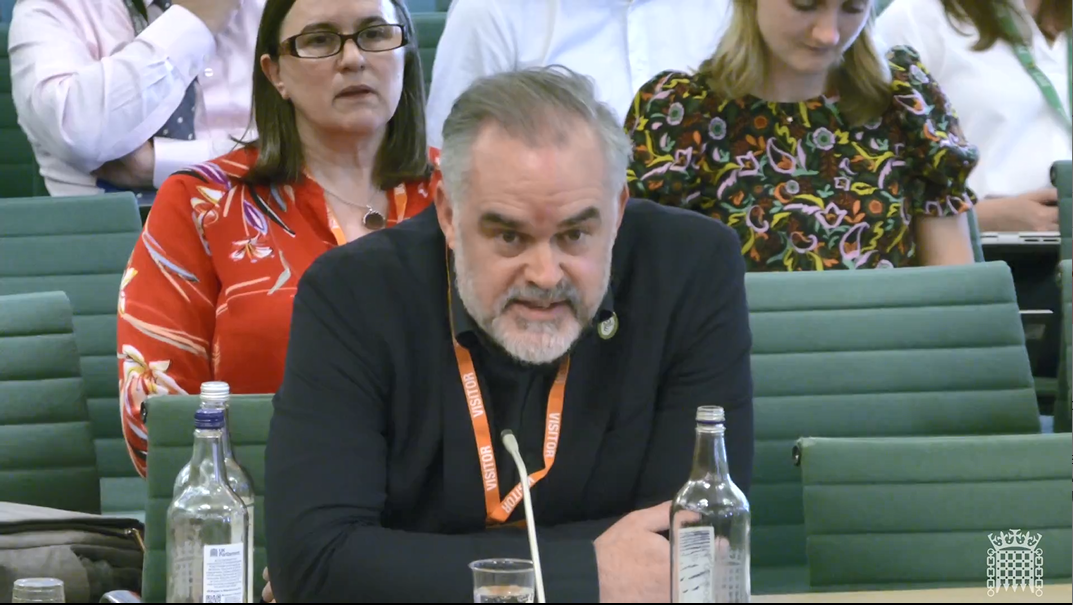
NHS reforms at risk as management capacity is cut, MPs told
MiP Chief Executive Jon Restell warns MPs that NHS reforms are at risk if the management capacity needed to make them happen is cut.
-
MiP responds to Health Secretary James Murray speech at NHS ConfedExpo
MiP says Health Secretary James Murray was right to recognise the innovation and creativity in the NHS, but the very people who drive it are the ones who are losing their jobs.


